
Lake Urmia's Heartbreaking Death: A Tragic Tale of Neglect 1/2
- Aug 7, 2023
- 4 min read
Updated: Sep 12, 2023
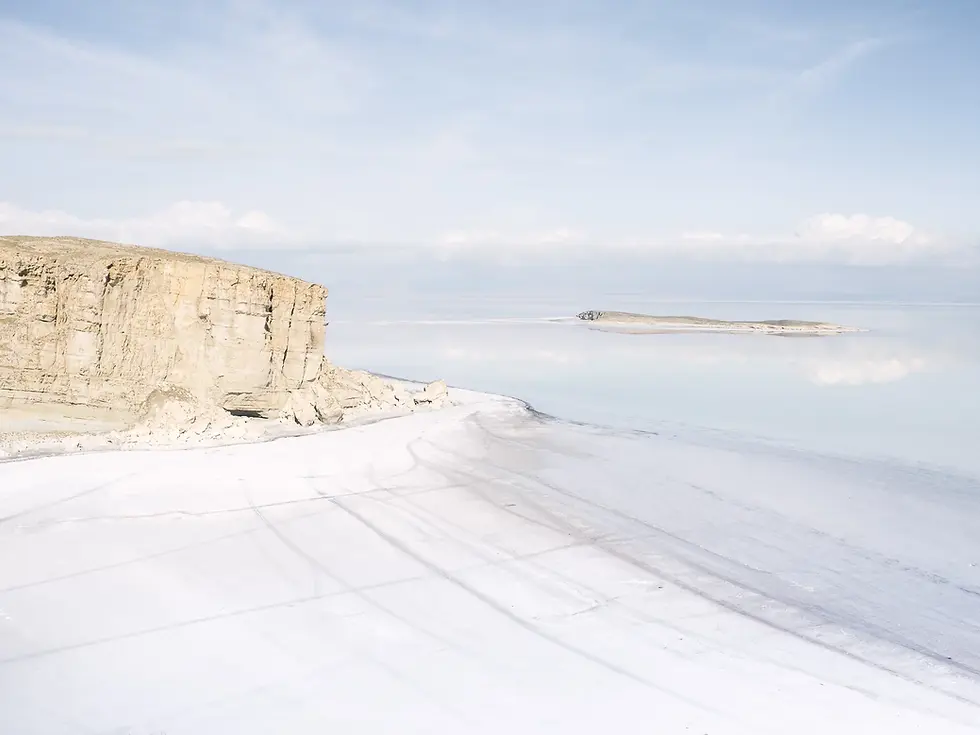
Photo by Maximilian Mann
Today I'm going to write about a topic that makes my heart ache every time it crosses my mind! Horrifying tales of destruction of ecosystems, repeated stories of human "development" at the expense of our planet! However, this time the cost is too high – it's the death of the biggest wetland in the Middle East!
As I was browsing the Iranian news outlets, I saw the title: Lake Urmia is done, it's has dried out fully! As if we all watched it gradually dying until now it's happened! I couldn't breathe for some seconds! Yes, I'm a dramatic soul, but I have reasons for it! The last time I read about Lake Urmia was last November when I was writing a paper about climate justice in Iran, and there was some hope in restoring the lake!
But I guess our country is doomed and there is no way out of it as We are living in one of the darkest social, environmental, and economic times of our modern history!
Anyways...
Iran's Water Crisis: Understanding the Challenge
Iran, nestled in southwestern Asia, is facing a major crisis called "water bankruptcy". A nation is said to be water bankrupt when water demand exceeds the natural water supply. It's like running out of money before the month's end, but with water. Horrifying, isn't it?
Various human-made factors have played a significant role in causing water scarcity in Iran. These factors encompass population growth, migration, urbanization, insufficient water infrastructure, an inefficient agricultural sector, and the construction of numerous dams. Additionally, with climate change, extreme conditions such as record-high temperatures, more frequent droughts, and unforeseen floods are happening.

The Sorrowful Fate of Lake Urmia
Picture this: Lake Urmia, once one of the world's largest salty lakes, has been rapidly shrinking in size. In just two decades, it's lost about 95% of its size. And hold onto your hat – this year, it's shrunk by a staggering 99.7%!
Lake Urmia is a transboundary water system located between East Azerbaijan and West Azerbaijan Provinces in northwest part of Iran.
The lake contains 14 main inflowing rivers and as an endorheic or terminal lake, water leaves the lake only by evaporation.
Well everything sounds great, so why is the lake shrinking? The answer is simple! Lack of sustainability mindset and mismanagement of resources!
Urmia's water levels are highly sensitive to its river inputs and one of the main reasons why the water levels has declined is construction of extraordinary dams. In the past three decades, Iran has positioned itself as one of the largest
dam-constructors in the world. I mean the 3rd place after Japan and China!
79 dams were constructed on the rivers feeding Lake Urmia, diverting river water for irrigation to expand the Iranian agricultural industry. Strange, isn't it? Development policies in Iran in the last 40 years have been mass murdering the ecosystems working for thousands of years!

The Puzzling Obsession with Dams
In the wake of the 1979 revolution that ousted the monarchy, Iran embraced a self-sufficiency strategy for food, partly to protect its new Islamist leadership from global influences. This ideological mindset has shocked and degraded Iran's water and soil resources. This shift also led to changes in the landscape, with lakeside vineyards making way – some due to religious considerations – for water-demanding crops like apples and sugar beets. The introduction of ambitious irrigation projects aimed at cultivating essential crops, accompanied by the construction of extensive dams along nearly every lake tributary.

As you can suggest, extensive construction of dams is a big contributor to water bankruptcy in Iran. Officials claim that these dams are a sign of the country's industrial progress and are needed to combat water shortages during dry periods. However, this approach has had a disastrous outcomes
Kaveh Madani, a globally-recognized environmental scientist and researcher and director at The United Nations University Institute for Water (UNU-INWEH) and once Deputy Head and Chief of Iran's department of environment has interesting insights about the obsession of building dams in Iran.
Madani explains that lakes naturally lose water through evaporation each year, but to maintain their levels, they need a certain amount of water inflow from rivers. If the inflow is reduced while evaporation continues, the lake will eventually dry up. He notes that the government and local businesses have decreased the lake's inflow by diverting water upstream for various uses like agriculture, city water supply, and industries. Madani criticizes the belief that money and technology alone can solve water problems, highlighting the lack of transparency, corruption, and short-term planning exacerbating the situation. He emphasizes that Iran's management system prioritizes survival over long-term and national interests, leading to attractive development projects for government and even parliament members, often disregarding environmental concerns.
Read his full article here.

A recent image of Lake Urmia's last breaths
This recent photo of Lake Urmia released in August 2023 shows the degree of devastation Iran's environment is experiencing today. A lake which throughout its lush shores, civilizations flourished and declined during history. This once vibrant nurtured countless lives over countless years – humans, animals, birds alike. Yet, its current state tells a different story- a story of a territory which it's nature and nation suffer from short sighted policy makers and politicians. I will elaborate more about the role of climate justice, human rights and democracy on environmental preservation in my next blog post.


Comments